European central banks scrap gold agreement after 20 years
31-07-2019
European central banks, together with the ECB, have agreed that there is no need to sign a new Central Bank Gold Agreement.
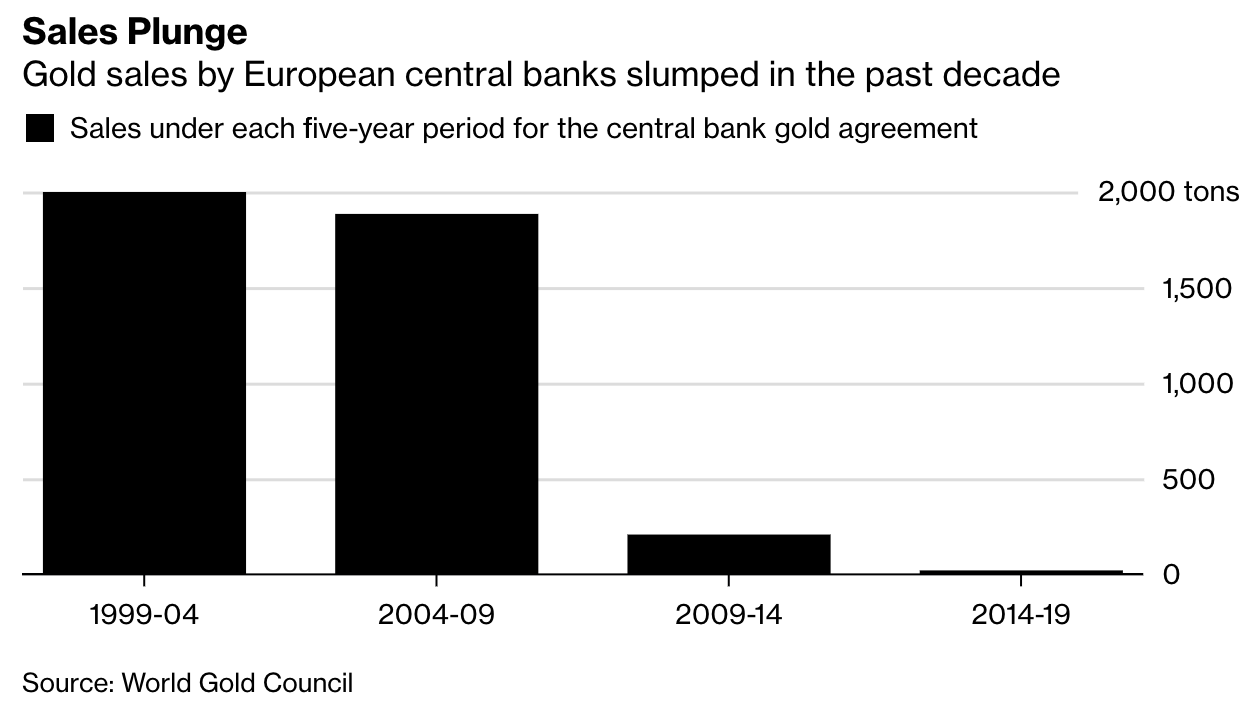
The first such agreement was signed in 1999. Its purpose was to ensure that central banks did not offer significant quantities of gold for sale on the market. The agreements set a limit that central banks were not allowed to exceed, preventing too much gold from coming onto the market within a short period of time.
The Central Bank Gold Agreement was eventually renewed 3 times: in 2004, 2009 and 2014. No limit was set at the last renewal. The reason is simple: central banks have been net buyers of gold since 2010.
Statement positive for gold
By not signing a new agreement, central banks are acknowledging that gold will be an important part of their monetary reserves in the years ahead. They are also signalling that they will no longer sell large quantities of gold. This was already evident in 2018, when central banks bought a total of 651.5 tonnes of gold. That was the largest annual purchase of gold since 1971, the same year the US dollar was decoupled from gold, marking the end of the so-called gold standard.
The World Gold Council also recognises the importance of this decision. Natalie Dempster, Managing Director Central Banks & Public Policy, responded as follows to the decision by the ECB and the European central banks:
“There has been a sea change in central banks’ attitudes toward gold since the financial crisis, and today’s announcement from the ECB is yet another sign of that. Last year, central banks bought more gold than at any time under the existing international monetary system. That buying has continued to accelerate this year, fuelled by heightened geopolitical and economic risks associated with other reserve assets and negative real and nominal interest rates. Compound that with fears of debt monetisation arising from record high budget deficit levels and currency wars and gold looks like a very attractive reserve asset. It’s the only reserve asset that has no political risk and you can’t print more of. Europe itself is now a net buyer of gold, so a sales agreement is no longer needed.
This is a major endorsement of gold’s role in global monetary reserves.“
Goudverzekerd uses cookies for an optimal shopping experience and security.
With your consent we also place cookies for anonymous analytics and loading external media (videos).
You can change your choice at any time via the .
Read more in our privacy policy.
Functional cookies
Always active — cart, session & security
Cookie settings
Functional (required)
Session, cart, CSRF protection and login status. Always active, no consent required.
Analytics
Anonymised statistics about page visits and website usage. No personal data is stored or shared.
Marketing
Personalised ads and remarketing via external parties such as Google and Meta.
External media
Videos (YouTube, Vimeo) and maps. These external parties may place their own cookies.