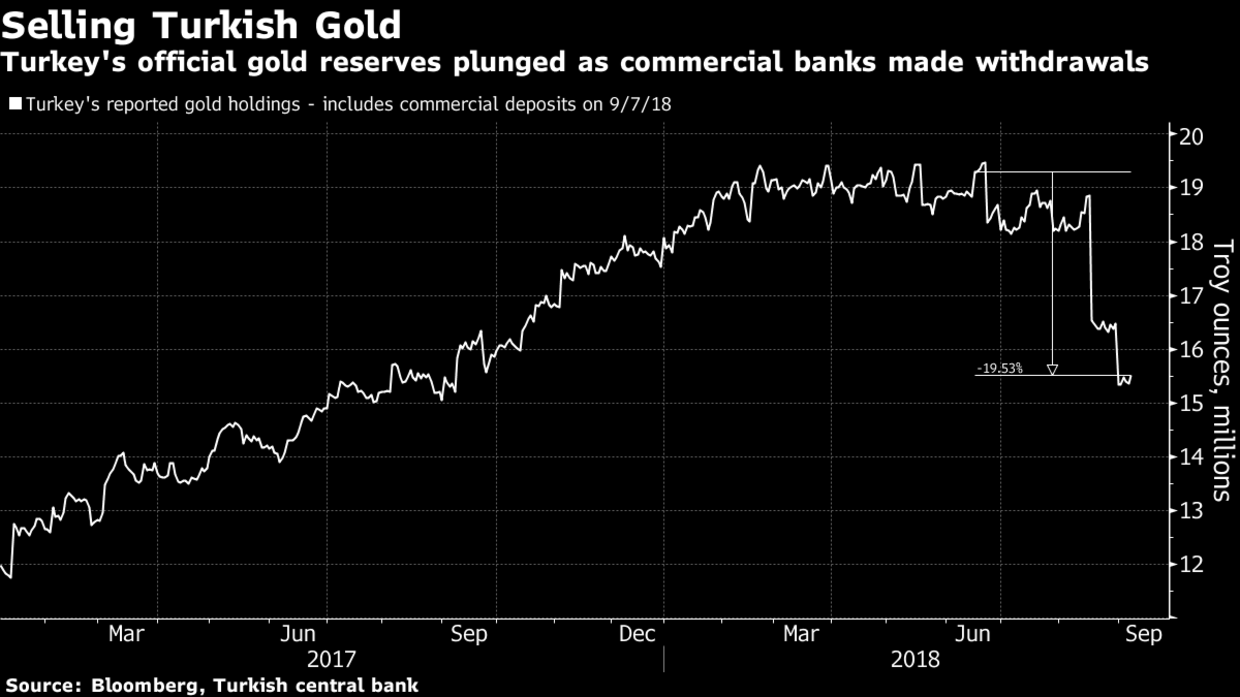
During the collapse of the Turkish lira, Turkish banks sold around 4.5 billion dollars' worth of gold.
The latest figures from the Turkish central bank show that gold holdings fell by 20 percent between June and August to 15.5 million ounces of gold. By selling the gold, several Turkish banks were able to meet the Turkish central bank's reserve requirements.
The most drastic decline occurred in August, when the lira crisis was (for the time being) at its peak. Whether the gold sell-off continues will depend on how the market reacts to the latest interest rate change.
Unlike in most countries, Turkish banks are allowed to use their precious metal deposits to meet their reserve requirements. Since 2011, the Turkish central bank has accepted gold holdings of commercial banks as fully fledged reserves.
Since 2011, the private gold deposits of commercial banks have therefore been added to the central bank's public gold reserves. Banks borrow on the international markets and secure their loans with gold deposits instead of the lira, which has been far too volatile in recent weeks.
Turkey is one of the largest countries in the world when it comes to gold consumption, surpassed only by Germany, the US, India and China.
Interest rate hike
Last Thursday the central bank raised interest rates drastically. The hike is intended to halt the fall of the Turkish lira and avert a new crisis. The key rate went up from 17.75 to 24 percent.
Erdogan is not in favour of the increase. In a speech on Thursday, he criticised the Turkish central bank and repeated his view that high interest rates will lead to higher inflation.
"If you say inflation is the cause and interest rates are the effect, you do not know what you are talking about. Inflation is a consequence of the wrong decisions you have taken."
Recep Tayip Erdogan
The rate hike is far from the end of Turkey's problems. In addition to high inflation, the country also has a current account deficit of 6.5 percent. Imports also fell sharply in August, by more than 22 percent. Analysts expect the Turkish economy to shrink by more than 3 percent next year.
Investors are also concerned about the tensions between Turkey and the US. These tensions began when Turkey refused to release the American pastor Andrew Brunson. In response, the US announced sanctions against Turkish ministers and doubled import tariffs on Turkish steel and aluminium. Trump has also threatened new sanctions.
Goudverzekerd uses cookies for an optimal shopping experience and security.
With your consent we also place cookies for anonymous analytics and loading external media (videos).
You can change your choice at any time via the .
Read more in our privacy policy.
Functional cookies
Always active — cart, session & security
Cookie settings
Functional (required)
Session, cart, CSRF protection and login status. Always active, no consent required.
Analytics
Anonymised statistics about page visits and website usage. No personal data is stored or shared.
Marketing
Personalised ads and remarketing via external parties such as Google and Meta.
External media
Videos (YouTube, Vimeo) and maps. These external parties may place their own cookies.