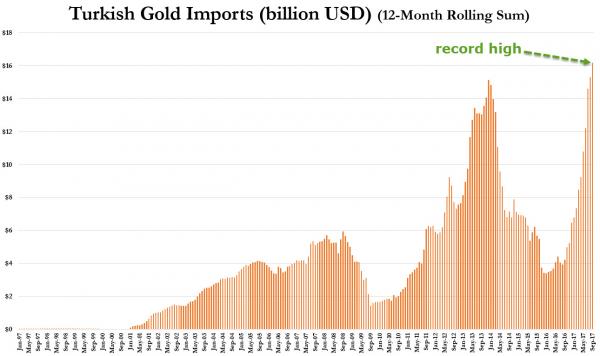
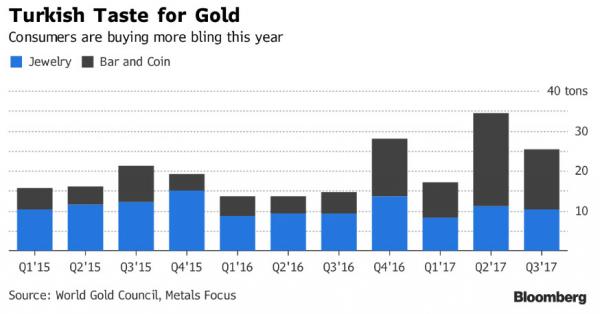
Turkey's appetite for gold has reached a peak this year. Turks have never bought as much gold as they have this year – and there are still two months to go.
Figures from Bloomberg show that 47 tonnes of gold bars, coins and jewellery were bought in 2017. In the same period last year, 14.8 tonnes were imported. The weakness of the Turkish lira and Erdogan's remarks about gold last November have fuelled the appetite for gold in Turkey.
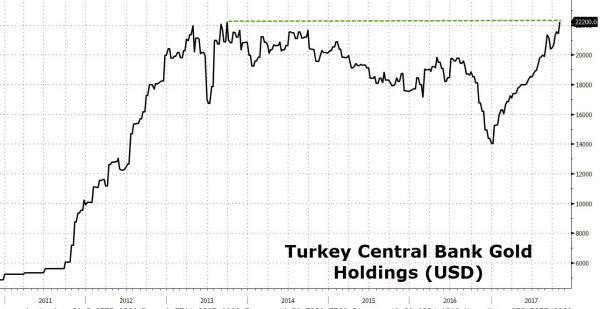
However, it is not only the population that is buying more and more gold; the Turkish central bank is too. In the third quarter of this year, the Turkish central bank's purchases increased by 30.4 tonnes of gold.
Although the Turkish central bank has historically pursued a diversification policy with a large share of gold, some analysts speculate that the country is now holding additional gold reserves amid rising tensions between Turkey and its traditional Western allies. Since last year's failed coup, relations with the West have cooled considerably. As a result, the country is increasingly left to fend for itself and wants to build up larger financial buffers to absorb any setbacks.
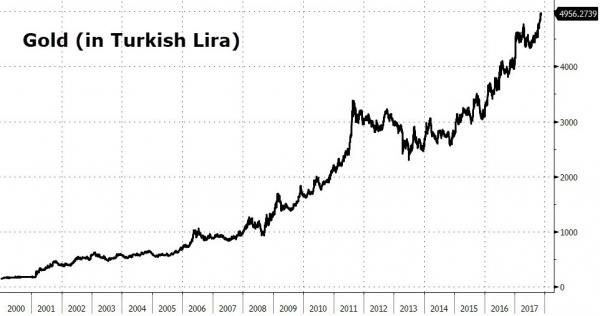
Gold has done exactly what it is supposed to do in a country whose own currency is taking heavy blows: preserve wealth against economic and political risks. The value of gold in Turkish lira has risen explosively in recent years, as shown below. Since 2000, the price of gold in Turkish lira has risen by more than 2,400%.
Goudverzekerd uses cookies for an optimal shopping experience and security.
With your consent we also place cookies for anonymous analytics and loading external media (videos).
You can change your choice at any time via the .
Read more in our privacy policy.
Functional cookies
Always active — cart, session & security
Cookie settings
Functional (required)
Session, cart, CSRF protection and login status. Always active, no consent required.
Analytics
Anonymised statistics about page visits and website usage. No personal data is stored or shared.
Marketing
Personalised ads and remarketing via external parties such as Google and Meta.
External media
Videos (YouTube, Vimeo) and maps. These external parties may place their own cookies.