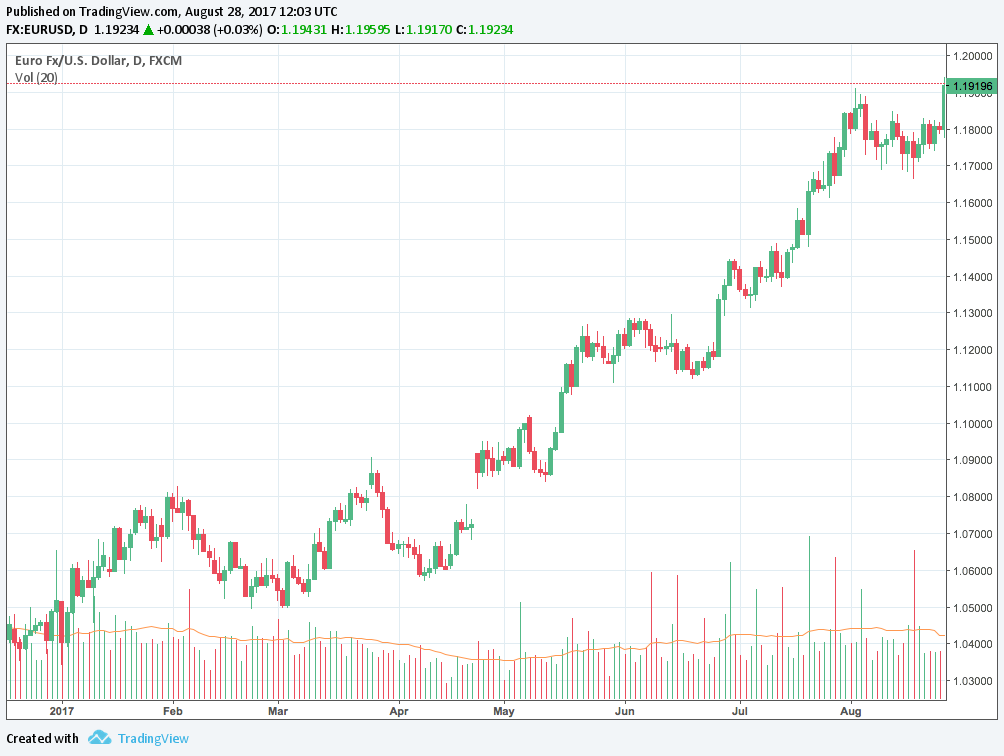
The euro is reaching its highest level in three years today. At the time of writing, one dollar is worth 1.193 euros.
Last weekend, Janet Yellen and Mario Draghi spoke at Jackson Hole. Neither central banker had anything new to say in their speeches. Despite the predictable speeches, the dollar fell and the euro rose to its highest level since early 2015. Against the British pound, the European currency is also at its highest level since late 2009.
Since the start of this year, the euro has risen by 13.7% against the dollar. The rally is the result of expectations that the ECB will scale back its huge asset purchase programme. Since a speech by Draghi in Sintra, Portugal, the euro has risen considerably against all other major currencies.
Many investors expect the ECB to start tapering its monthly purchase programme, worth 60 billion euros, in the near term. Interest rates are also expected to fall further; they currently stand at -0.4%. If the ECB decides to pump less money into the markets, money will become (relatively) scarcer. Hence the current rally in the euro.
A strong euro poses a risk for Europe
Although the expensive euro makes holidays to countries such as the United States and the United Kingdom cheaper, this development also carries a risk. The expensive euro threatens to put European stock markets and corporate profits at risk.
The expensive euro will make imported products cheaper. This will make it even harder to bring inflation up to the desired target of 2%.
Goudverzekerd uses cookies for an optimal shopping experience and security.
With your consent we also place cookies for anonymous analytics and loading external media (videos).
You can change your choice at any time via the .
Read more in our privacy policy.
Functional cookies
Always active — cart, session & security
Cookie settings
Functional (required)
Session, cart, CSRF protection and login status. Always active, no consent required.
Analytics
Anonymised statistics about page visits and website usage. No personal data is stored or shared.
Marketing
Personalised ads and remarketing via external parties such as Google and Meta.
External media
Videos (YouTube, Vimeo) and maps. These external parties may place their own cookies.