Demand for gold bars and coins rises 11% in H1 2017
03-08-2017
Demand for gold in the second quarter of this year was 10% lower than in the second quarter of 2016. The decline was mainly due to lower inflows into gold ETFs. However, the World Gold Council did see an increase in demand for gold bars, coins and jewellery compared with a year ago.
Bars & Coins
Demand for gold bars and coins rose by 13% in the second quarter compared with the second quarter of 2016. Demand was driven mainly by China and India. In India demand rose by 26%, while demand for gold coins and bars in China rose by 56%. In the first half of this year, demand for gold bars and coins rose by 11% compared with the first half of 2016.
As always, central banks continued to stock up on physical gold, albeit at a slightly slower pace than before. In 2016, central banks bought a combined 182.5 tonnes of gold. In the first half of this year the figure is slightly lower, at 176.7 tonnes of physical gold. The increase in global gold reserves was driven almost entirely by substantial purchases from just a handful of central banks.
The Central Bank of Russia, for example, bought 35.7 tonnes of gold in the second quarter of this year. Kazakhstan also kept adding gold to its reserves for the 57th (!) consecutive month, buying 11.3 tonnes in the second quarter. The second quarter also marked the return of the Turkish central bank. The country added 21 tonnes of gold to its reserves; its first significant accumulation since the 1980s.
Jewellery
Demand for gold jewellery also rose, mainly on the back of strong demand from India. In the second quarter of 2017 the country bought 126.7 tonnes of gold jewellery. That is an increase of 41% compared with the 89.8 tonnes of gold jewellery in the second quarter of 2016. In China, demand for gold jewellery fell by just under 5%, to 137.7 tonnes.
Demand for jewellery in Turkey also rose by 20% year on year. The increase was mainly due to a strong rally in the Turkish lira against the US dollar. In addition, the Turkish wedding season triggers a strong wave of buying in the country.
ETFs
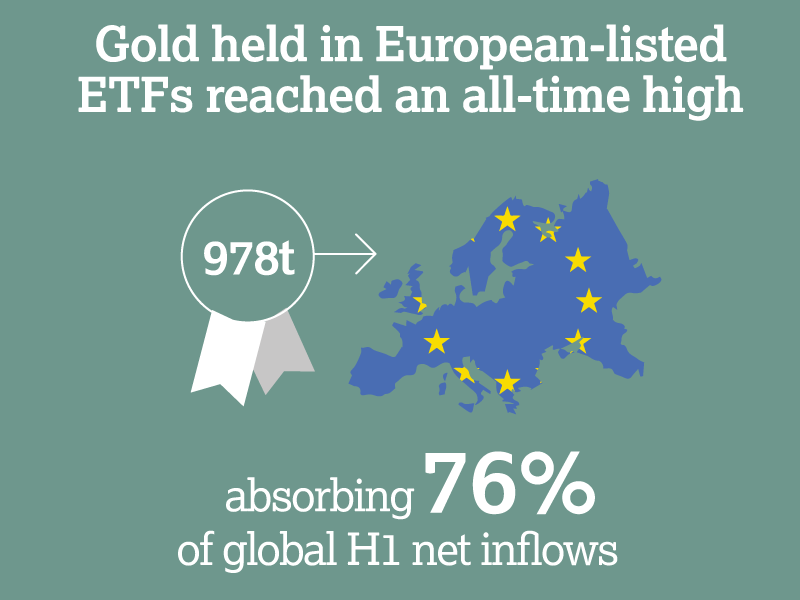
Investors in gold-backed exchange-traded funds (ETFs) saw an inflow of 56 tonnes of gold in the second quarter of 2017. That is a decrease of 76% compared with the second quarter of 2017. Over the first half of the year as a whole, demand for gold ETFs came largely from Europe. Europe accounted for 76% of total inflows into gold ETFs.
In contrast to the inflows in Europe, China saw a sharp decline in demand for gold ETFs. What is particularly striking is how gold ETFs are viewed in China. According to the World Gold Council report, 54% of Chinese investors regard an investment in a gold ETF as speculative and purely short-term. This is in contrast to gold bars and/or coins.
Goudverzekerd uses cookies for an optimal shopping experience and security.
With your consent we also place cookies for anonymous analytics and loading external media (videos).
You can change your choice at any time via the .
Read more in our privacy policy.
Functional cookies
Always active — cart, session & security
Cookie settings
Functional (required)
Session, cart, CSRF protection and login status. Always active, no consent required.
Analytics
Anonymised statistics about page visits and website usage. No personal data is stored or shared.
Marketing
Personalised ads and remarketing via external parties such as Google and Meta.
External media
Videos (YouTube, Vimeo) and maps. These external parties may place their own cookies.