BIS: recent sell-off on financial markets only the beginning
17-12-2018
The turmoil on the financial markets, which in recent weeks has broughtdeep-red figures and falling prices, cannot be regarded as a temporary correction. That is the view of Claudio Borrio, chief economist at the Bank for International Settlements (BIS).
The BIS fears that investors will face sharp price swings in 2019, as set out in the bank's latest report.
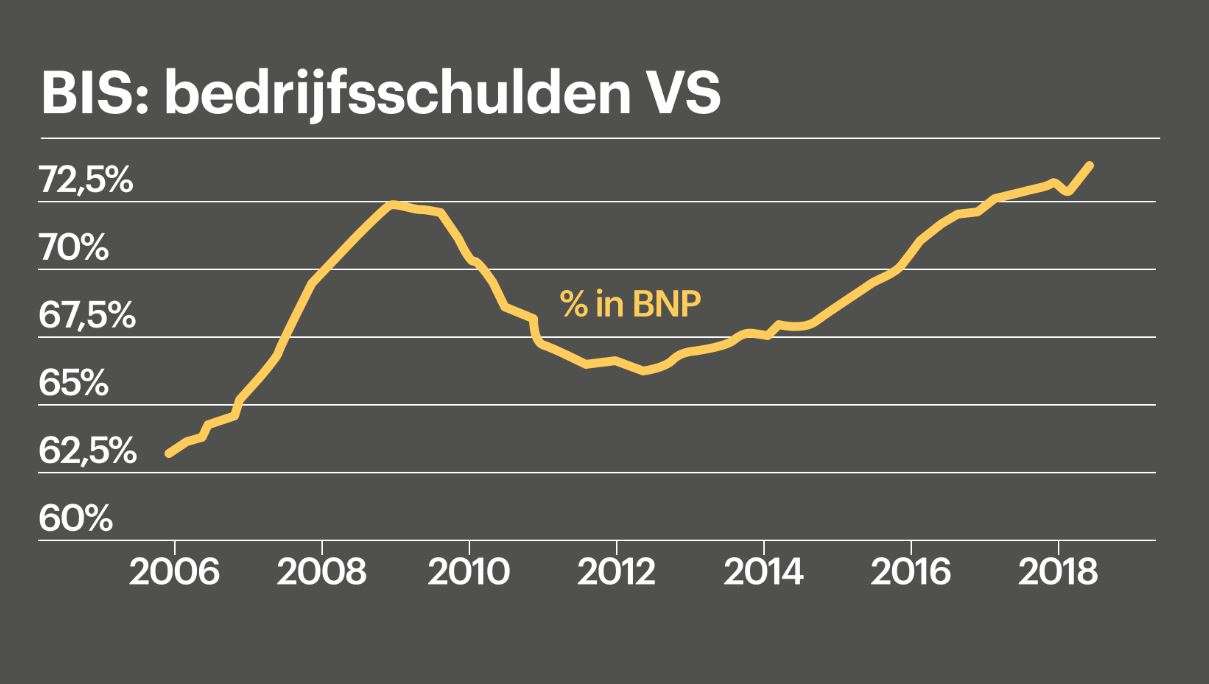
The BIS's concern about a correction in 2019 relates mainly to central bank monetary policy. For years central banks loosened the monetary reins and cut interest rates, combined with various asset purchase programmes, but these are now coming to an end. The Federal Reserve has already ended its purchase programme and raised interest rates several times. The European Central Bank will also stop its purchase programme next year and gradually begin raising rates. Thanks to the extremely low interest rates of recent years, companies were able to benefit by borrowing more (cheap) money. As a result, corporate debt is now even higher than before the 2008 financial crisis.
China
The effects of low interest rates are not only visible in the US and Europe. In China, too, the problems of the low-rate policy are surfacing. Hans de Geus, market commentator at RTL Z, says that Chinese companies have borrowed more because of low interest rates, using their own shares as collateral. When companies run into trouble, banks call in the collateral and then dump those shares.
TINA
The extremely low interest rates of recent years drove investors into the stock markets en masse, as investing in cash or bonds yielded nothing. The situation of recent years is also referred to as TINA (There Is No Alternative).
According to the BIS, investors fear that economic growth will collapse, partly because of the protracted trade conflict between China and the US. Moreover, short-term interest rates in the US recently rose above long-term rates for the first time since 2007. Such an inverted yield curve is often a sign of an impending recession.
Goudverzekerd uses cookies for an optimal shopping experience and security.
With your consent we also place cookies for anonymous analytics and loading external media (videos).
You can change your choice at any time via the .
Read more in our privacy policy.
Functional cookies
Always active — cart, session & security
Cookie settings
Functional (required)
Session, cart, CSRF protection and login status. Always active, no consent required.
Analytics
Anonymised statistics about page visits and website usage. No personal data is stored or shared.
Marketing
Personalised ads and remarketing via external parties such as Google and Meta.
External media
Videos (YouTube, Vimeo) and maps. These external parties may place their own cookies.